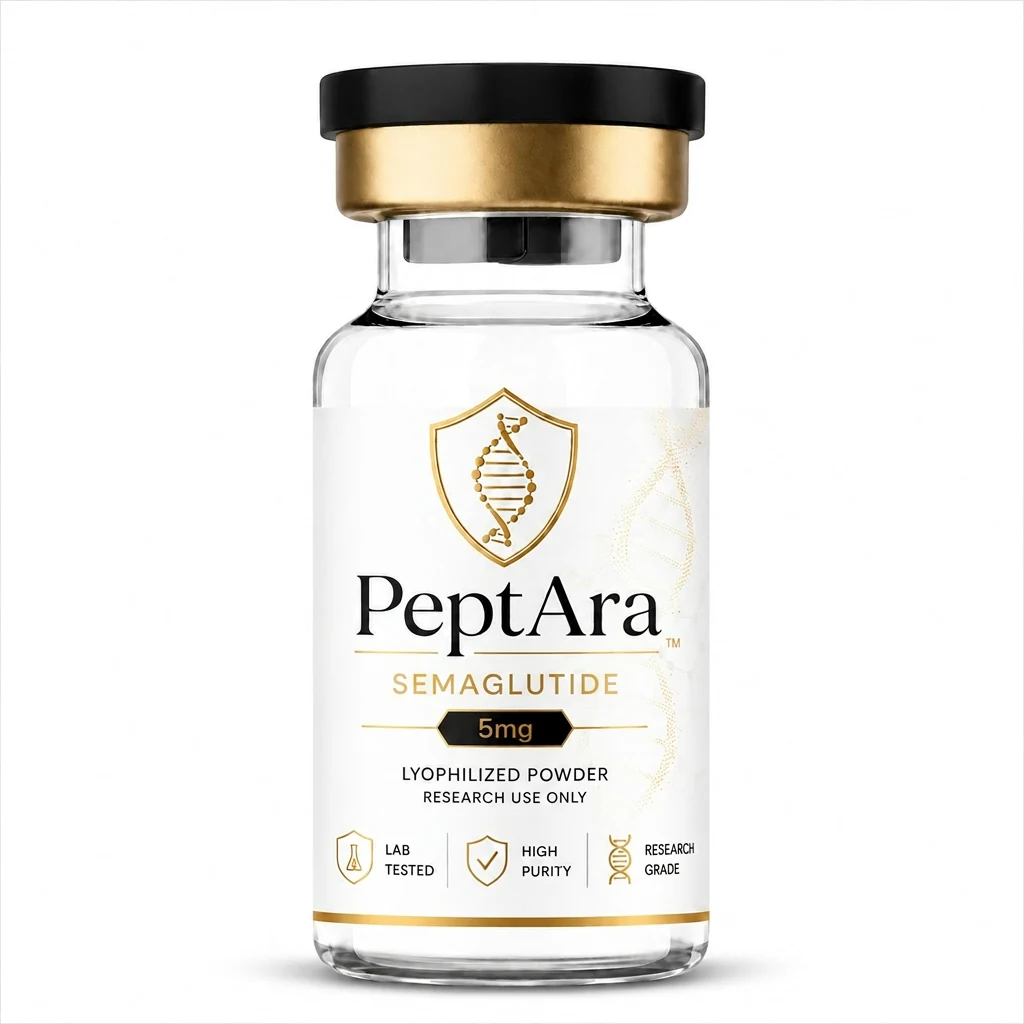
USA-based research overview for semaglutide — its GLP-1 receptor profile, structural identity, weight-loss study landscape, and expected analytical documentation.
Semaglutide is a long-acting GLP-1 receptor agonist that has become one of the most extensively published research peptides in the USA. Originating from native GLP-1, the molecule was engineered with substitutions and a C18 fatty diacid linker that together extend its half-life to roughly one week and stabilize it against DPP-4 cleavage.
Structural identity
- 31-amino-acid GLP-1 analog
- Aib substitution at position 8 (DPP-4 resistance)
- C18 diacid spacer linked at Lys26 for albumin binding
- Average mass approximately 4113.6 Da
Mechanism of action
Semaglutide selectively activates the GLP-1 receptor, a class B GPCR expressed in pancreatic β-cells and central appetite circuits. Agonism elevates intracellular cAMP, drives glucose-dependent insulinotropic responses, and modulates gastric emptying and satiety pathways measured in published US trial endpoints.
Published research dosing reference
| Week | Weekly Reference Dose |
|---|---|
| 1–4 | 0.25 mg |
| 5–8 | 0.5 mg |
| 9–12 | 1.0 mg |
| 13–16 | 1.7 mg |
| 17+ | 2.4 mg |
Stability and reconstitution
Lyophilized semaglutide is typically stored at -20°C and reconstituted with bacteriostatic water. Published storage references document reconstituted material as stable for ~30 days at 2–8°C when handled aseptically.
What a verified COA shows
- ≥98% HPLC purity
- LC-MS confirmed mass within ±0.5 Da
- Counterion identity and content
- Endotoxin per laboratory method
- Batch ID + synthesis date traceable to lot record