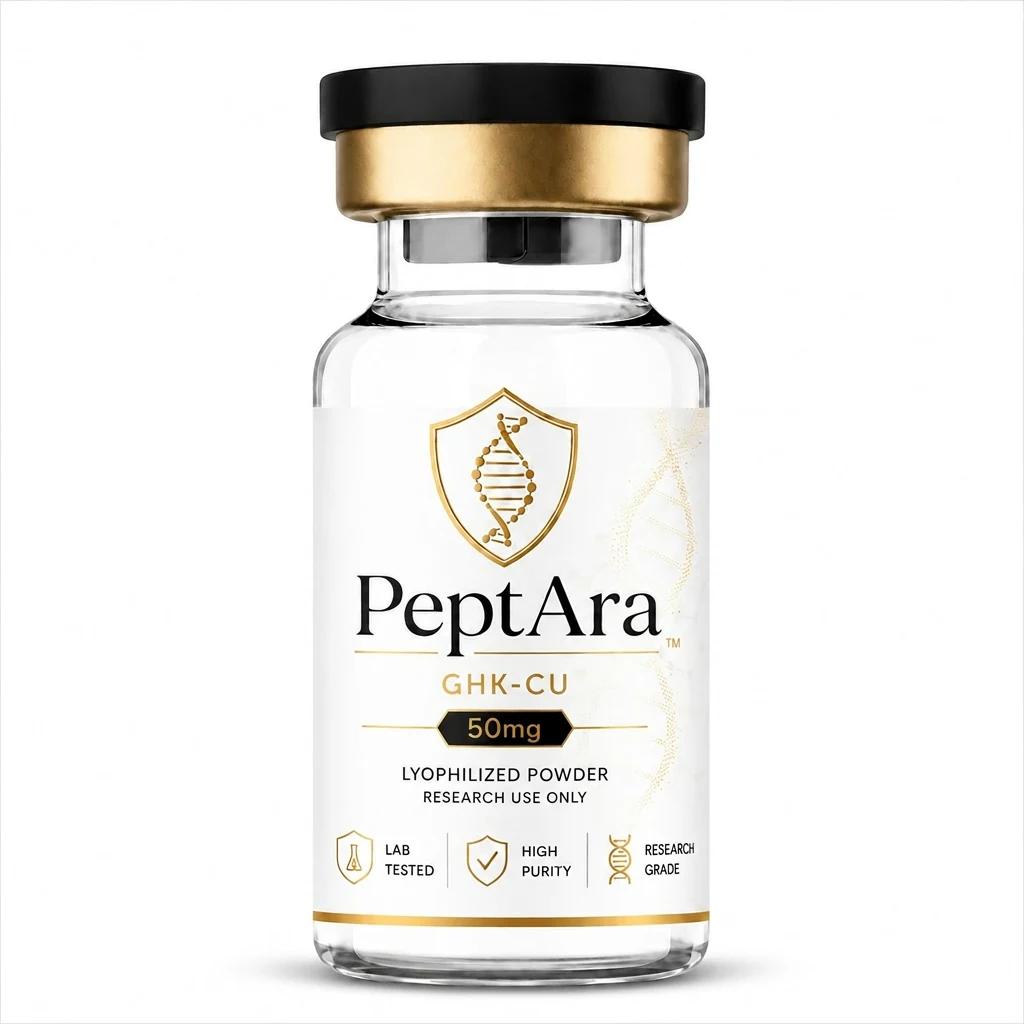
GHK-Cu — also known as the copper peptide or GHK copper peptide — research profile covering complex chemistry, signaling, and laboratory verification.
GHK-Cu is the copper-bound complex of the tripeptide glycyl-l-histidyl-l-lysine (GHK). First isolated from human plasma, the complex is one of the most extensively documented bioactive peptides in US dermatological and tissue-research literature.
Complex chemistry
The GHK sequence coordinates a divalent copper ion (Cu²⁺) through the imidazole nitrogen of histidine, the α-amino group of glycine, and the deprotonated peptide nitrogen. The resulting square-planar complex is the signaling-active species and produces the characteristic deep-blue color used during qualitative batch verification.
Documented research signaling
- Modulates expression of genes related to extracellular matrix turnover in cultured fibroblasts.
- Influences SOD and antioxidant enzyme expression in published in-vitro models.
- Demonstrates affinity for collagen and decorin binding sites in laboratory studies.
- Reported to support angiogenic markers in cell-culture wound-model literature.
What a verified GHK-Cu COA includes
- ≥98% HPLC purity of the GHK peptide
- Quantified copper content (~17–20% by mass for the 1:1 complex)
- LC-MS confirmation of GHK mass (340.4 Da)
- UV-Vis absorbance at ~620 nm consistent with the Cu²⁺ complex
Frequently asked research questions
Is GHK-Cu the same as the copper peptide?
Yes. "Copper peptide" and "GHK copper peptide" both refer to the GHK-Cu complex.
What does the blue color mean?
The deep blue color is the absorbance signature of Cu²⁺ coordinated by GHK and is a qualitative indicator the complex has formed correctly.